
Discover Your Animal Archetype With Free Spirit Animal Test
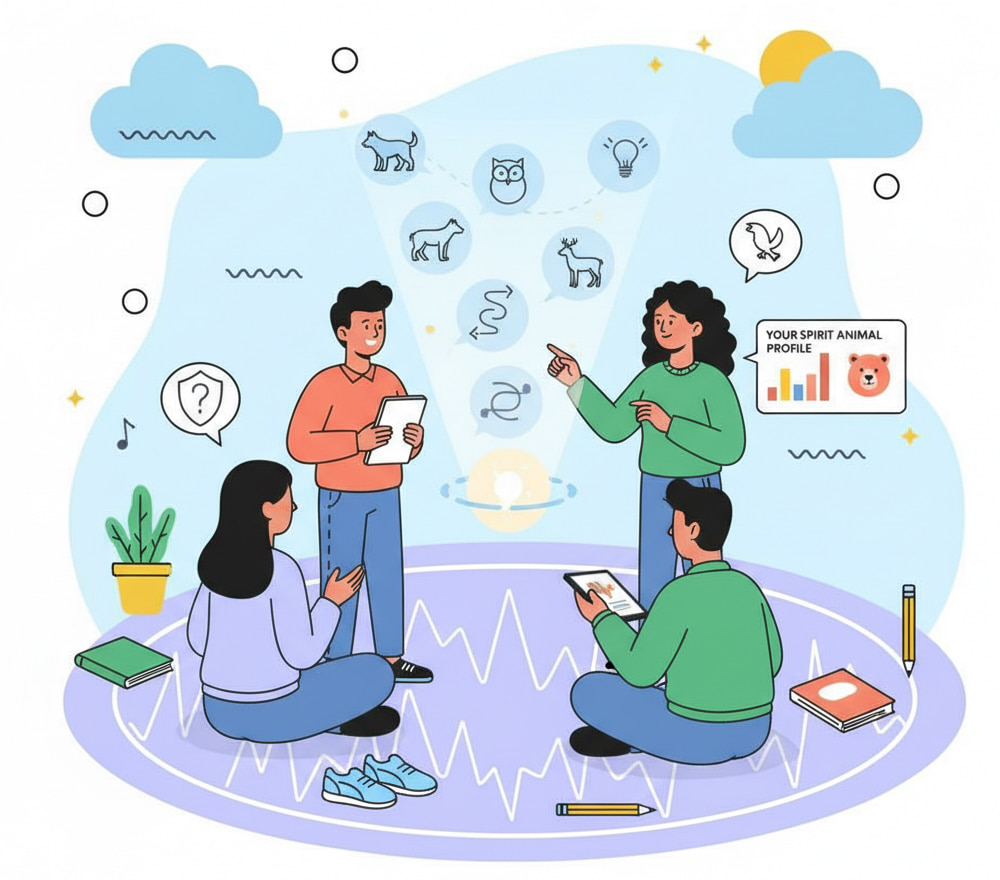
Spirit Animal Personality Test
Get StartedWhat Is a Spirit Animal Quiz and Why Does It Captivate So Many Seekers
Across cultures and generations, people have looked to animals as mirrors of inner strengths, quiet fears, and untapped potential. A modern quiz inspired by this tradition attempts to map your behaviors, motivations, and values to an animal archetype that embodies parallel traits. The result feels resonant not because a creature literally defines you, but because symbolism provides a compact, memorable story about your patterns. That story can illuminate blind spots, validate talents, and nudge meaningful choices in daily life.
Consider how you react to conflict, where you find energy, and what kinds of goals excite you. When a structured set of questions translates those inputs into a creature with distinct characteristics, you get a language for self-reflection that is both playful and practical. The archetype offers a shorthand for strengths you can leverage and habits worth rebalancing. Rather than boxing you in, it gives you a starting point for curiosity and a frame for nuanced exploration.
People also enjoy how concise summaries and evocative imagery deepen recall. You are more likely to remember “wolf-like teamwork and loyalty” than a long description of collaboration styles. That memorability is useful during stress or change, when clear metaphors help you act decisively. Whether you use the framework in journaling, personal development, or team workshops, the effect is similar: symbolism turns complex personality data into actionable insight that travels with you.
- Archetypes make complicated traits easier to discuss.
- Memorable imagery boosts long-term recall and application.
- Quizzes offer a playful path into serious self-knowledge.
- Simple metaphors reduce overwhelm during decision-making.
How the Assessment Works and Why Its Insights Often Feel Uncannily Accurate
Behind the friendly interface sits a set of items designed to surface your preferences, impulses, and values across contexts. Questions probe social energy, risk tolerance, curiosity, empathy, and boundary-setting, then weight responses to estimate which animal pattern aligns with your answers. The process echoes well-known models in psychology that identify clustering tendencies: how certain traits frequently travel together and predict consistent behavior across situations.
Many people appreciate that the spirit animal test free access lowers barriers to entry for reflective work, letting them sample insights before investing more time elsewhere. Calibration helps reliability, too. When the quiz is tuned on a large sample, discarding ambiguous items, improving wording, and balancing trait coverage, results become both intuitive and robust for a general audience. Interpreting patterns through metaphor further strengthens retention, because narratives help you connect dots between separate aspects of your life, such as career choices and relationship dynamics.
Accuracy also improves when you answer honestly and consider context. For instance, a person can be adventurous in travel yet cautious in finance; the instrument accounts for this by asking domain-specific prompts. Consistency across those prompts increases confidence that the identified archetype reflects a broad tendency instead of a temporary mood. If a result surfaces a surprising trait, that contrast can be fertile ground for growth, suggesting skills you’ve underused or motivations you’ve overlooked until now.
- Answer with recent, typical behavior rather than ideals.
- Reflect on multiple contexts: home, work, friendships, and learning.
- Revisit results after life transitions to observe shifts.
| Archetype | Signature Strengths | Growth Opportunities |
|---|---|---|
| Wolf | Loyalty, teamwork, strategic patience | Balancing independence with collaboration |
| Eagle | Vision, big-picture thinking, boldness | Grounding ideas with concrete follow-through |
| Dolphin | Playfulness, communication, empathy | Setting boundaries to avoid overextending |
| Bear | Stability, protection, steady determination | Flexibility in fast-changing situations |
| Fox | Adaptability, creativity, clever problem-solving | Choosing ethical routes over quick wins |
Benefits: From Self-Awareness to Career Alignment and Relationship Harmony
Few tools offer such a lively bridge between introspection and action. When an archetype reflects your natural strengths, you gain language to articulate what energizes you and why certain tasks drain you. That clarity guides daily choices, from scheduling high-focus work during peak alertness to delegating tasks that clash with your temperament. Over time, small adjustments compound, creating more flow and less friction.
In relationships, animal metaphors can diffuse tension by shifting the conversation from blame to patterns. If you lean toward protective habits while a partner values spontaneity, the imagery helps you see complementary strengths rather than competing agendas. Teams can also use archetypes to plan meetings, assign roles, and balance risk styles during planning cycles. A project benefits when visionary, detail-oriented, and diplomatic energies all find a seat at the table.
Personal growth is another rich area. The symbolic profile highlights potential growth edges, patience for bold explorers, courage for careful planners, or assertiveness for skilled mediators. Journaling about those edges clarifies next steps, while revisiting the profile quarterly can reveal how your habits evolve with new responsibilities and goals. The result is a dynamic practice that pairs the delight of mythology with practical self-management.
- Make calendar changes that align with your energy patterns.
- Use shared language to improve collaboration and empathy.
- Track progress with periodic reflections on your archetype.
How to Take the Quiz, Read the Results, and Turn Insights Into Daily Habits
Start by choosing a well-constructed assessment with clear instructions and balanced questions. Set aside ten quiet minutes so you can respond from experience rather than aspiration. Many people skim results, but deeper value emerges when you read slowly, underline resonant lines, and note any tensions between how you act and how you wish to act. Those tensions point to practical experiments you can try this week.
If you prefer a quick on-ramp to exploration, a free spirit animal test can function as a friendly doorway to reflective practice as you proceed. After receiving your animal match, scan the traits and ask where they show up in your life: projects, friendships, learning, and rest. Pick one strength to leverage immediately and one growth area to explore with a small, low-risk experiment. By keeping changes tiny, you build momentum and gather evidence without overwhelm.
Integrate insights into routines to make them stick. Schedule a five-minute review on Fridays to log where your archetype helped or hindered outcomes. Share the summary with a trusted colleague or friend to increase accountability and invite perspective. After a month, compare notes with your original interpretation to observe patterns that repeat, fade, or evolve. This habit transforms a fun result into a durable framework for personal leadership.
- Underline two traits that feel undeniably true today.
- Design a micro-experiment to stretch one growth edge.
- Reflect weekly and adjust based on evidence, not hunches.
Pro Tips, Common Pitfalls, and Ethical Considerations
Quizzes are guides, not verdicts. Treat the output as a working hypothesis that you refine with lived experience. Resist the urge to cherry-pick only flattering traits; growth accelerates when you sit with discomfort and translate it into skill-building. If a description feels off, consider context: stress, sleep, role expectations, or cultural norms can shape how traits appear in the moment. Reassessing after meaningful changes often yields a profile that matches your current season.
Avoid stereotyping yourself or others with oversimplified labels. Archetypes are metaphors designed to spark conversation, not rigid categories to wield in arguments or hiring decisions. Respect consent when discussing someone else’s results, and honor privacy by sharing only what feels comfortable. Ethical use also means acknowledging cultural roots: animal symbolism spans Indigenous wisdom, mythic storytelling, and ecological observation, so approach the practice with humility and gratitude.
To maximize benefits, combine symbolic insights with practical tools like journaling prompts, feedback from trusted peers, and skill-focused learning. Keep a running list of situations where your archetype shines and scenarios that reliably challenge you. Then design buffers: prepare scripts for tough conversations, build checklists for high-stakes tasks, or set boundaries that protect your focus. When you pair evocative metaphors with concrete supports, you turn inspiration into steady progress.
- Use the profile as a lens, not a label.
- Invite feedback to test and refine your understanding.
- Balance mythic storytelling with evidence-based practices.
FAQ: Clear Answers to Common Questions
How long do results typically take to complete and review?
Most assessments require five to ten minutes to finish, and you can review the narrative summary immediately. If you allocate a bit more time afterward to reflect, you’ll capture more value from the insights. Consider jotting down two real situations that match the described traits so the guidance becomes concrete and memorable.
Can my archetype change over time?
Core tendencies tend to be stable, but expression can shift with new roles, environments, and responsibilities. After a major life event, try a reassessment to see whether certain traits have strengthened or softened. Use the comparison to update routines, communication strategies, and priorities for the season you are in now.
Should I retake the quiz if the result doesn’t resonate?
Start by rereading the description with curiosity, looking for partial matches rather than all-or-nothing agreement. If it still feels misaligned, retake the assessment after rest, or try a different instrument with clearer questions. Complement any result with feedback from people who know you well to triangulate your patterns.
Is this useful for teams or just individuals?
Teams can benefit tremendously when members share their archetypes during a norms-setting conversation. The language helps clarify strengths, preferred work styles, and stress responses. Use the insights to assign roles, structure meetings, and plan handoffs so complementary traits are leveraged intentionally throughout a project lifecycle.
What’s the best way to turn insights into action?
Translate one strength and one growth area into specific weekly experiments. Keep them small, observable, and time-bound, then review results at a consistent cadence. Over time, stack these micro-improvements into routines that align with your natural tendencies while stretching the capacities you most want to develop.